

Coronavirus, or COVID-19, is an evolving situation impacting us all, including charities and non-profit organizations. So it’s essential you have a robust communication strategy that helps answer all questions people will have — from volunteers to stakeholders; communities to fundraiser recipients.
There are various ways to communicate with these audiences though, especially as they’ll have different concerns related to the situation, and how it affects your non-profit. In fact, we recommend setting up an internal communication plan to help navigate any issues or queries that might come up.
Read below for key communication tips for non-profits dealing with COVID-19.
Why is a communication plan so important?
Communication is key during the times of an international crisis. Appeals need to remain empathetic, genuine and considerate – the tone of your message is just as important as the content. Remember, donating to charities might not be the first priority on your donors’ lists. But this is why it’s just as important to explain why your cause is so worthwhile and why your non-profit needs support.
Few charities have a full-scale communications team, but by building out a thoughtful plan, you can cover most bases and be prepared. Essentially, it’s important you stay transparent about where and why things are changing. As part of a “crisis management” approach, people need to be on the same page with you about what’s taking place.
Here’s how we recommend setting up your communication plan:
1. Identify who you need to reach out to.
Think of all those you need to share information about during this crisis and note them down — such as major donors, volunteers, internal staff and event attendees.
2. Think about what you need to tell them.
Here are some things to think about communicating with people across the organization.
- Your donors will need to know if their contributions are being affected because of the crisis — e.g. if you are not able to directly help your recipients for the time being. If this is the case, you need to explain why, and what the plan is to recover.
- Your volunteers will need to know which events are cancelled and whether they’re able to help out at others, such as virtual fundraising events.
- Your fundraising recipients will need to be kept updated on cash flow and whether funds raised are able to reach them or not during this time, and what the plan of action is.
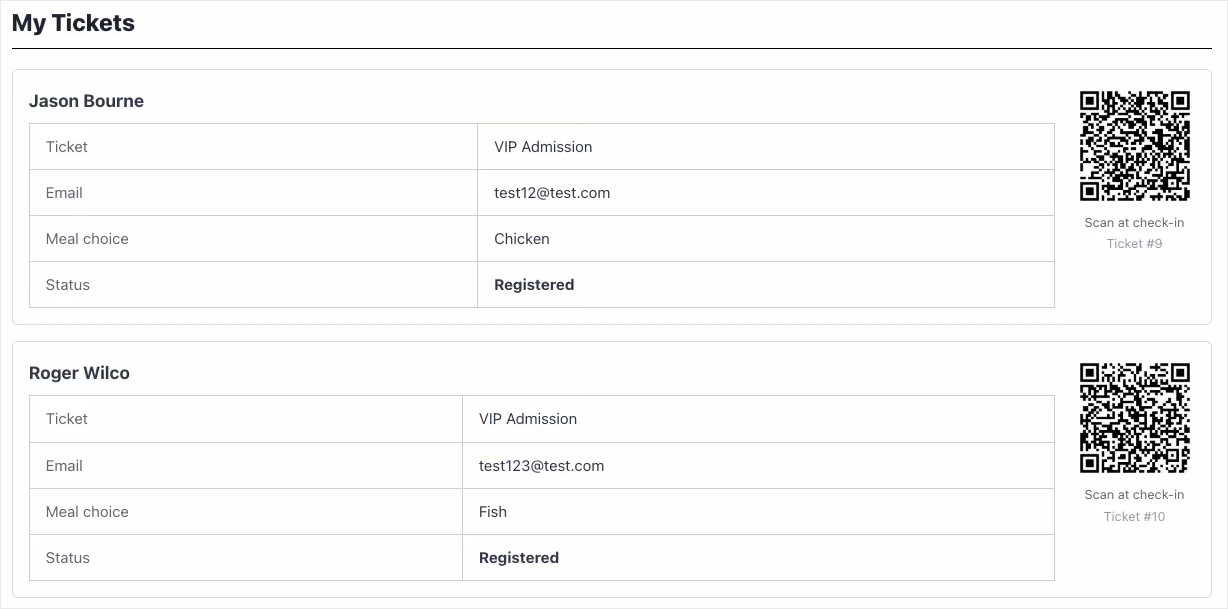
- Your event ticket buyers will need to be informed if and when events are cancelled, and how you’re planning to maintain fundraising efforts — offering other ways they can still help and be involved in your campaigns.
- Your employees will need to know what the remote working situation is (and whether they need to be facilitated with the tech or equipment to work from home). They’ll also want to hear how the organization is planning to safeguard the team once people start coming back to work — such as social distancing measures.
3. Create a plan for specific staff members to reach out to these audiences.
Whoever is running social channels, web content and email marketing should be made aware of the communication they need to be sending out in relation to the crisis.
Your supporters will expect to see updates on your social media pages about how and why funds are being affected, how you’re keeping your recipients safeguarded and what else they can be doing to help make a difference. Create a series of posts that shows you’re aware of the crisis, and explain the measures you’re doing to adapt to the situation as best as you can. But also demonstrate the relevance of the pandemic to your non-profit, and why it’s important to maintain support.
On your WordPress page, make sure you have a banner, headline or pop-up that shows you’re monitoring the ongoing situation and providing updates. You can go further and develop pages specifically dedicated to content that relates to the pandemic.
PETA, for example, has a whole blog section dedicated to COVID-19 topics, with articles ranging from subjects like where the virus originated (wet markets in China) to adopting a pet during the lockdown period.
Here’s a great excerpt from one of their blogs – Life After Lockdown: Our Chance to Rebuild the World.

Over the last few centuries – and especially in recent decades – humankind has made great progress in becoming more compassionate, valuing justice and freedom, and promoting and safeguarding the rights of all human beings. However, in our fervent pursuit of prosperity, many of us have failed to recognise a simple truth: we are one species among millions. Every choice we make – from the food we eat and the clothes we wear to the way we entertain ourselves – has an impact on the planet and the animals we share it with.
When we emerge from lockdown, we must strive to fix the problems we’ve created and to show Mother Nature and our fellow animals the respect they deserve.
Here, PETA has demonstrated how their charity is affected and is relevant to them, offering their audiences clear information about how to support them during the pandemic.
Here’s another good example of a non-profit creating content and communications around the COID-19 crisis.
The Innocence Project, a charity which exonerates the wrongly convicted through DNA testing and reforms the criminal justice system to prevent future injustice, has created a page around the pandemic. There, they have key content around how the crisis is affecting their work and how you can still do your bit to help.

Here’s a great example around how a death row exoneree is advocating for support for others during the COVID-19 pandemic.
The COVID-19 (coronavirus) crisis has created new challenges for exonerees and the need to fix Florida’s compensation laws is now more urgent than ever. Last week, we hosted a virtual town hall to discuss the impact of this pandemic on Florida exonerees and the innocent who remain behind bars.
“When I first heard about COVID-19, I was sad to think about all the people who are still incarcerated, as there is no good medical care in prison. I have not heard exactly how many positive cases of coronavirus are currently in prison, but I know from personal experience how horrible the medical system is. They never have what it takes to treat people and they never give it the importance that certain cases require.”
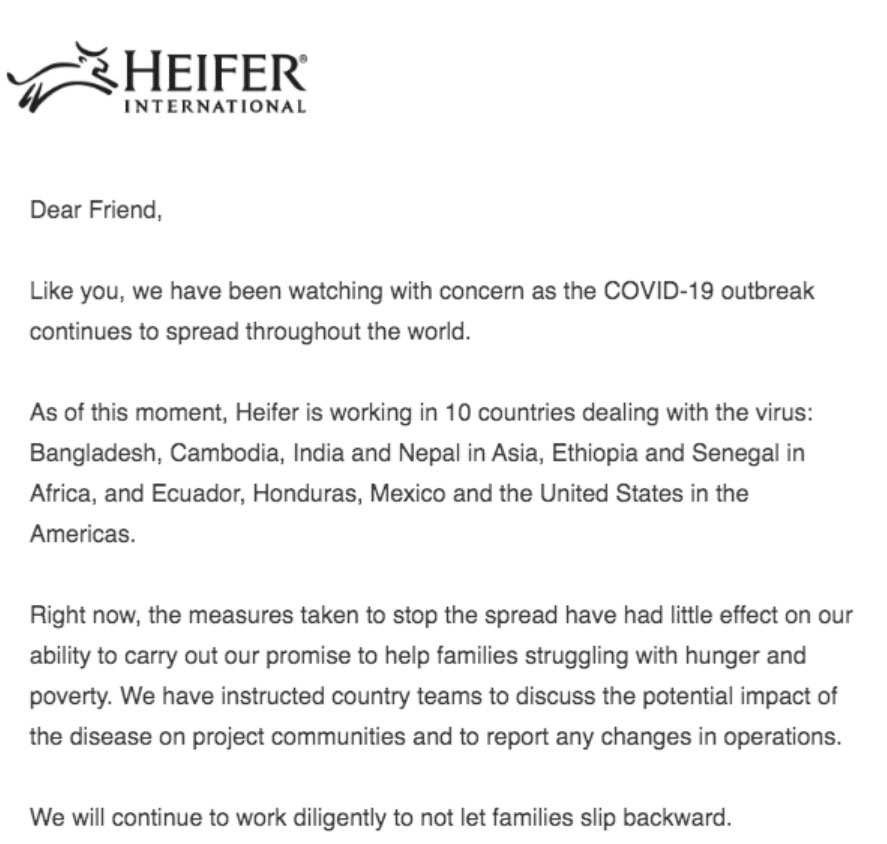
When it comes to your email marketing campaigns, you’ll need to reach out to your supporters as the situation develops. Make sure you send regular, ongoing messages – as ones that take too long could damage your reputability and trust with your audiences.
Here’s a great email from Heifer about how the crisis is affecting them.
Remember, generally comms and content around COVID-19 will vary based on what kind of non-profit you run, but all organizations can draw on their causes, missions and offerings to be a true driver for good. Use these examples as inspiration and look out for what kind of communications other non-profits you admire are sending out.
4. Consider the content.
Your messaging needs to be clear, concise and emotionally sensitive – so create an outline of the content you’ll be sending out. Keep an ongoing list of key points you want to share and prioritize which messages are the most urgent.
You don’t want to communicate too many messages in a single email, so schedule them out and ensure that each email has a clear focus.
5. Regularly check in with your comms team.
Whoever is creating communications around the COVID-19 crisis, make sure they’re engaged and aware. Set up regular meetings to review communications for proofreading and general tone of voice, as well as clarity and consistency. If it’s just a one-man team setting up all the content and communications, it can help to have another pair of eyes on it – ask a friend or family member to proofread your content.
Here are some further tips to think about when setting up communication points around the COVD-19 pandemic.
Stay empathetic.
Make sure your tone of voice and messaging stays empathetic, from the subject line to the call-to-action.
Be transparent.
It’s vital you stay honest with people, from employees to supporters. If you don’t have the answer to a question, don’t be tempted to make one up or tell people what you think they want to hear.
Don’t encourage panic.
Where people tend to be consuming a plethora of news and social media, it’s easy for them to panic. Don’t add to this – instead, use your campaigns as a way to keep supporters focused on continuing to do good in the world despite the pandemic.
Make sure communication is a two-way street.
It’s great to send out newsletters and offer up communications around the topic on your website, but also offer room to answer questions from your audiences, such as by using a webchat service or email address to answer queries.
Conclusion
This is a time like none of us have ever experienced before, which is why good communication is so important. Without it, you risk losing touch with your supporters, team members and stakeholders, as well as valuable fundraising streams that will be extra critical to have during a pandemic. So, create a solid communication plan, build relevant digital content on your website around how and where you’re tackling causes despite (or in light of) the new situation, and keep your supporters informed via your email marketing campaigns.
Make sure your tone of voice is strong and calm during this time, too – avoid being part of the wave of mass-panic many of your supporters will be experiencing from other outlets. Against others, be a voice of reason – and show your audience why now, more than ever, it’s a great time to support your causes!
Enjoyed this article? Read this next:



Leave a Reply