
Si vous posez cette question, vous n’êtes pas seul. Pratiquement tout le monde à qui je parle se pose la même question.
Mais voici ce qui est intéressant : nous avons déjà vécu cela.
Laissez-moi vous ramener aux années 1980…
Lorsque les distributeurs automatiques de billets ont été introduits pour la première fois, les gens s’inquiétaient – Cela remplacera-t-il le contact humain ? Les gens cesseront-ils de visiter les banques ? Les emplois disparaîtront-ils ?
La peur semblait justifiée. Mais cela ne s’est pas produit. 🤷🏽
Au lieu de cela, les distributeurs automatiques ont rendu les services bancaires plus efficaces. Les banques ont ouvert plus de succursales dans les communautés mal desservies.
Les guichetiers sont passés du comptage d’argent à l’aide aux clients pour résoudre de vrais problèmes, comme la création de comptes pour petites entreprises ou l’explication des options de prêt.
🔄 Le même schéma s’est répété avec les ordinateurs, le courrier électronique, les services bancaires en ligne.
Chaque fois, la technologie a libéré des capacités pour faire un travail plus significatif.
Trop long pour lire ? ▶️ Regardez sur YouTube : Comment les organisations à but non lucratif et les œuvres de bienfaisance peuvent commencer à utiliser l’IA de manière pratique
Nous avons déjà eu cette peur
L’anxiété que vous ressentez face à l’IA ? C’est naturel car c’est un territoire inconnu. Nous apprenons tous ensemble ce que c’est.
À l’époque où les ordinateurs faisaient leur entrée dans les foyers, une publication de 1983, Personal Computing, par Charles Rubin, le disait parfaitement :
« Peut-être sommes-nous amenés à croire que quiconque ne s’intéresse pas vivement et ne désire pas utiliser un ordinateur personnel doit être malade… La chose la plus importante à retenir à propos de la phobie informatique est qu’il s’agit d’une réaction naturelle à quelque chose d’inconnu. »
Si vous essayez d’utiliser un ordinateur personnel ou envisagez d’en utiliser un, rappelez-vous : permettez-vous d’être un peu ignorant pendant un certain temps. Prévoyez de passer du temps à apprendre ; donnez une chance à l’ordinateur de faire ses preuves avant de décider que vous ne pouvez pas l’utiliser ; prenez les choses étape par étape ; assurez-vous de lire attentivement la documentation ; et enfin, n’oubliez pas que c’est vous qui êtes aux commandes, pas l’ordinateur. »
– Informatique personnelle, 1983
Ces mots sont vrais pour l’IA maintenant. L’histoire se répète.

Mais les ordinateurs n’ont pas été la première technologie « effrayante »
Remontons encore plus loin, aux années 1920 et 1930, lorsque la radio devenait populaire.
Beaucoup craignaient qu’elle ne détruise l’intimité et la vie privée familiales en introduisant des voix extérieures et commerciales. L’industrie du divertissement craignait que les émissions de radio gratuites n’entraînent une baisse de la fréquentation des spectacles en direct et ne réduisent les ventes de disques.
Mais les craintes allaient encore plus loin.
Les gens ont blâmé les ondes radio pour des maux physiques – maux de tête, maux d’estomac et maladies mystérieuses chez les humains et les animaux. Certains agriculteurs ont affirmé que leurs vaches cessaient de produire du lait à cause des interférences radio. D’autres ont insisté sur le fait que les ondes radio causaient l’insomnie et des troubles nerveux.
Il y a eu de véritables paniques sanitaires concernant cette technologie invisible qui rendait littéralement les gens malades.
Qu’est-il réellement arrivé ?
La radio n’a pas vidé les églises et les salles de cinéma. Au lieu de cela, elle a aidé les chefs religieux à atteindre les personnes qui ne pouvaient pas y assister physiquement – les personnes âgées, les malades, ceux qui vivaient dans des zones rurales. La radio est devenue une autre forme d’éducation, de divertissement et de publicité. Elle a ouvert tout un éventail de nouveaux emplois.
Et les ondes radio ? Elles ne causaient pas de maladies mystérieuses. La peur était réelle, mais le danger ne l’était pas.
Vous souvenez-vous des guerres des calculatrices ?
Dans les années 1980, lorsque les calculatrices de poche sont devenues abordables, les enseignants et les parents se sont insurgés.
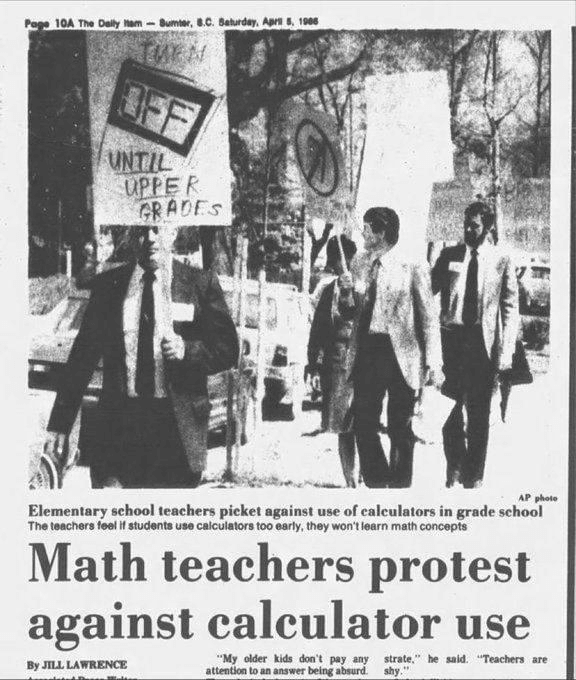
« Les enfants n’apprendront pas les concepts mathématiques de base ! »
« Ils deviendront dépendants des machines pour l’arithmétique simple ! »
« Les compétences en calcul mental disparaîtront complètement ! »
Les écoles ont interdit les calculatrices dans les salles de classe. Certains districts les ont interdites complètement, craignant qu’elles ne créent une génération incapable d’additionner, de soustraire, de multiplier ou de diviser sans aide électronique.
Tous leurs arguments étaient valables. La plupart des écoles aujourd’hui autorisent l’utilisation des calculatrices au lycée.
Les plus jeunes élèves apprennent toujours les concepts mathématiques de base. Les calculatrices dans les classes supérieures ont libéré les élèves des calculs fastidieux afin qu’ils puissent se concentrer sur la compréhension de la pensée mathématique et la résolution de problèmes.
Au lieu de passer 30 minutes à faire une division longue à la main, les élèves pouvaient passer ce temps à apprendre comment appliquer les mathématiques à des problèmes du monde réel. Ils sont passés de calculateurs humains à des penseurs mathématiques.
Aujourd’hui ? Les calculatrices sont standard dans les cours de mathématiques. Parce qu’une fois que vous comprenez les concepts, l’outil vous aide à aller plus loin plus rapidement.
Pensez à l’e-mail. Vous souvenez-vous quand les gens se plaignaient qu’il était trop impersonnel ? Allait-il tuer la vraie communication ? Maintenant, c’est juste… l’e-mail. Un outil. Ni bon ni mauvais en soi.
Le schéma est toujours le même :
- Une nouvelle technologie arrive
- Les gens craignent qu’elle n’élimine des emplois, ne détruise les liens humains, ou ne nous rende « moins que »
- Nous nous adaptons et découvrons qu’elle nous libère en fait pour faire un travail plus significatif
- La technologie devient invisible – juste une partie de notre fonctionnement
L’IA suit exactement le même schéma
La peur est naturelle. L’incertitude est réelle.
Mais voici ce que nous savons de l’histoire : la technologie ne remplace pas les liens humains et le travail significatif. Elle remplace les tâches fastidieuses qui nous empêchaient d’avoir des liens humains et un travail significatif.
- Les distributeurs automatiques de billets n’ont pas éliminé les guichetiers – ils ont éliminé la tâche fastidieuse de compter l’argent toute la journée, afin que les guichetiers puissent réellement aider les gens dans leurs objectifs financiers.
- Les ordinateurs n’ont pas éliminé les employés de bureau – ils ont éliminé la retouche de documents entiers pour chaque révision, afin que les gens puissent se concentrer sur la qualité de leurs idées.
- Les calculatrices n’ont pas éliminé les compétences en mathématiques – elles ont éliminé les calculs fastidieux, afin que les élèves puissent se concentrer sur la pensée mathématique et la résolution de problèmes du monde réel.
- L’e-mail n’a pas éliminé la communication – il a éliminé l’attente de plusieurs jours pour qu’une lettre arrive, afin que les conversations puissent avoir lieu plus rapidement.
L’IA n’éliminera pas le cœur du travail associatif – servir votre communauté, bâtir des relations et faire en sorte que des changements réels se produisent.
Mais cela peut vous éviter de passer trois heures à formater une proposition de subvention, ou à mettre à jour manuellement les dossiers des donateurs, ou à rédiger le même modèle d'e-mail de remerciement pour la centième fois.
L'IA est puissante, mais elle a toujours besoin du jugement humain, de la créativité humaine et de la direction humaine. La machine peut trouver des schémas, mais ce sont les humains qui décident de ce que ces schémas signifient et comment les utiliser pour le bien.
La question n'est pas de savoir si l'IA va changer le fonctionnement des organisations à but non lucratif. Elle va le faire.
La question est : allez-vous vous adapter et l'utiliser pour amplifier votre impact, ou allez-vous laisser la peur vous maintenir dans l'inefficacité pendant que votre mission en souffre ?
Mais soyons honnêtes : la technologie n'est pas toujours bénigne
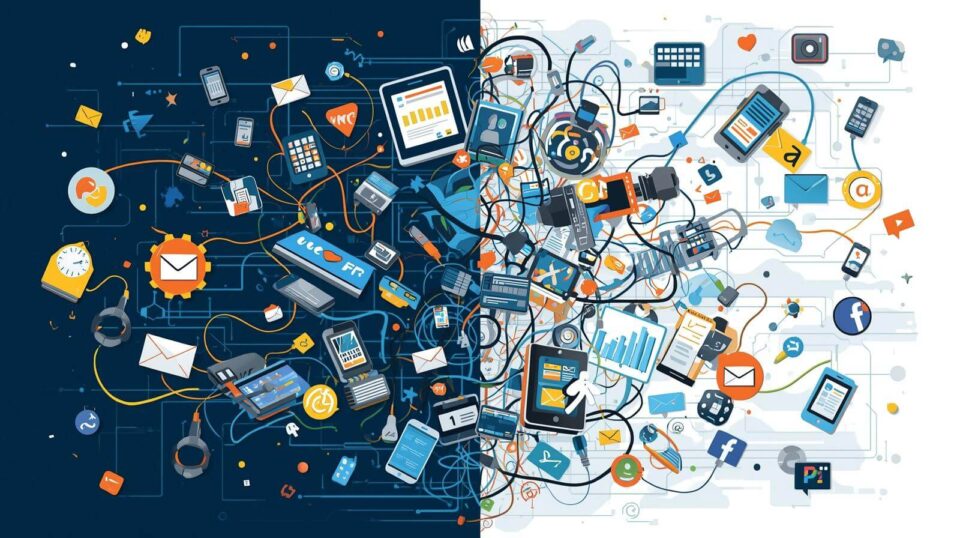
L'histoire nous apprend aussi que toutes les craintes concernant la technologie n'étaient pas infondées.
Les médias sociaux étaient censés nous connecter. Et ils l'ont fait – mais ils ont aussi créé des chambres d'écho, diffusé de la désinformation et contribué à des crises de santé mentale, en particulier chez les jeunes. Des études lient désormais une utilisation excessive des médias sociaux à l'anxiété, à la dépression et à une diminution de la capacité d'attention.
L'e-mail nous a donné une communication instantanée, mais il a aussi créé une culture de travail « toujours connectée » où les gens se sentent obligés de répondre à toute heure. La frontière entre vie professionnelle et vie privée s'est estompée, contribuant à l'épuisement professionnel.
Les smartphones ont mis le monde de l'information dans nos poches, mais ils ont aussi créé des comportements de type addictif. Nous les consultons en moyenne 96 fois par jour. Les dîners de famille sont interrompus. Les conversations sont fragmentées. La présence authentique est devenue rare.
L'automatisation a effectivement éliminé certains emplois et des communautés entières construites autour de la fabrication ont été dévastées lorsque les usines ont fermé. La promesse de « reconversion » ne s'est pas toujours concrétisée pour les travailleurs d'une cinquantaine d'années qui avaient passé toute leur carrière à faire un seul type de travail.
Internet a démocratisé l'information, mais il a aussi rendu la vie privée presque inexistante. Nos données sont collectées, vendues et utilisées d'une manière que nous ne comprenons pas entièrement ni n'autorisons.
La technologie n'était pas le problème – c'est la façon dont nous l'avons utilisée qui l'était
Voici la leçon essentielle : la technologie amplifie les choix humains.
Les médias sociaux sont devenus toxiques non pas parce que la technologie elle-même était mauvaise, mais parce que les plateformes privilégiaient l'engagement au détriment du bien-être. L'indignation et la division maintenaient les gens à scroller – et scroller signifiait plus de revenus publicitaires.
Les e-mails sont devenus écrasants parce que nous avons choisi d'être disponibles 24h/24 et 7j/7. Nous n'avons pas fixé de limites. Les organisations n'ont pas établi de normes de communication saines.
Les smartphones sont devenus addictifs parce qu'ils ont été délibérément conçus ainsi – utilisant des astuces psychologiques pour nous faire revenir pour « juste une notification de plus ».
Il en sera de même pour l'IA.
L'IA peut aider votre organisation à but non lucratif à servir plus de personnes, à collecter plus de fonds et à libérer votre équipe du travail administratif épuisant.
Ou l'IA peut être utilisée pour générer du contenu impersonnel et générique qui aliène vos donateurs. Elle peut perpétuer des biais dans vos programmes si vous ne faites pas attention aux données à partir desquelles elle apprend. Elle peut créer une déconnexion entre votre organisation et votre communauté si vous l'utilisez pour remplacer l'interaction humaine authentique plutôt que pour l'améliorer.
Voici pourquoi nous devons être vigilants quant à la façon dont nous l'utilisons
L'IA est un outil. Comme tout outil, elle peut être utilisée bien ou mal.
La différence entre une IA qui aide votre organisation à but non lucratif à prospérer et une IA qui rend votre travail creux réside dans l'intentionnalité.
Demandez-vous :
- Utilise-t-on l'IA pour libérer du temps pour plus de connexion humaine, ou pour éviter la connexion humaine ?
- Utilise-t-on l'IA pour amplifier ma voix et mon message, ou pour remplacer entièrement ma voix authentique ?
- Révisons-nous et personnalisons-nous ce que l'IA produit, ou nous contentons-nous d'appuyer sur « générer » et de passer à autre chose ?
- Réfléchissons-nous aux biais qui pourraient exister dans les résultats de l'IA, ou acceptons-nous tout tel quel ?
- Suis-je transparent avec les donateurs et les parties prenantes lorsque l'IA joue un rôle dans mes communications ?
Les organisations à but non lucratif qui réussiront avec l'IA sont celles qui l'utiliseront comme un tremplin pour un travail plus significatif – et non comme un remplacement.
Utilisez l'IA pour rédiger la demande de subvention, puis ajoutez l'histoire et la passion uniques de votre organisation.
Utilisez l'IA pour générer des idées de médias sociaux, puis infusez-les de votre voix authentique et de photos réelles de vos programmes.
Utilisez l'IA pour analyser les données des donateurs, puis utilisez ces informations pour avoir des conversations plus significatives avec les sympathisants.
Au moment où vous laissez l'IA tout faire, au moment où vous retirez le jugement humain, la créativité et le cœur de l'équation – c'est là que la technologie devient probablement un problème.
Ainsi, bien qu'une grande partie de cet article ait été écrite par moi – un humain, des outils d'IA ont aidé à la recherche, à le peaufiner, à corriger les erreurs grammaticales, et aussi à créer certaines des images que vous voyez ici pour le rendre visuellement attrayant.
La véritable leçon de l'histoire : les humains doivent garder le contrôle
Vous souvenez-vous de cette citation de 1983 sur les ordinateurs ? La dernière phrase était la plus importante :
« N'oubliez pas que c'est vous qui commandez, pas l'ordinateur. »
C'est toujours vrai aujourd'hui.
L'IA doit servir votre mission. Elle doit amplifier votre impact. Elle doit vous redonner du temps et de l'énergie.
Mais vous – avec votre empathie, votre compréhension des besoins de votre communauté, votre passion pour votre cause – vous devez rester au volant.
Ce n'est pas seulement un joli sentiment. C'est une nécessité. Parce que l'IA sans surveillance humaine n'est pas seulement inefficace – elle peut être activement nuisible.
Ce que cela signifie pour votre organisation à but non lucratif
Soyons réalistes un instant.
Vous êtes déjà débordé. Peut-être que ce n'est que vous et une petite équipe qui essayez de tout faire – gérer les programmes, rédiger les subventions, gérer les donateurs, mettre à jour votre site Web, publier sur les médias sociaux, répondre aux e-mails, suivre les bénévoles, et servir réellement votre communauté.
Vous avez probablement commencé votre travail d'organisation à but non lucratif parce que vous teniez profondément à une cause. Vous vouliez faire une différence.
Mais quelque part en cours de route, vous vous êtes retrouvé enseveli sous des tâches administratives. Des feuilles de calcul. Des bases de données de donateurs. Des campagnes d’e-mails. Des demandes de subvention avec des exigences de mise en forme spécifiques. Des algorithmes de médias sociaux exigeant un contenu constant.
Le travail de mission qui vous passionne ? Il se fait en marge – coincé entre tout le « bazar » administratif qui fait fonctionner l’organisation.
C’est là que l’IA change tout.
L’IA fait ce que les distributeurs automatiques ont fait pour les banques
Vous souvenez-vous comment les distributeurs automatiques ont libéré les guichetiers de la banque du comptage d’argent toute la journée, leur permettant ainsi d’aider réellement les clients avec des décisions financières importantes ?
L’IA fait la même chose pour le travail associatif.
Elle retire les tâches répétitives et chronophages de votre assiette afin que vous puissiez vous consacrer à un travail de plus grande valeur – le travail qui nécessite réellement votre jugement humain, votre créativité, votre empathie et votre expertise.
Voici à quoi cela ressemble en pratique :
Au lieu de passer 2 heures à rédiger des e-mails de remerciement individuels aux donateurs, l’IA vous aide à créer des modèles personnalisés en 15 minutes, vous redonnant 1 heure et 45 minutes pour appeler vos principaux donateurs et établir des relations.
Au lieu de passer un après-midi entier à reformater une proposition de subvention pour répondre à des exigences spécifiques, l’IA s’occupe de la mise en forme pendant que vous vous concentrez sur la création d’un récit convaincant sur votre impact.
Au lieu de fixer un écran vide en essayant d’écrire des légendes pour les médias sociaux de la semaine, l’IA vous donne des points de départ que vous pouvez personnaliser – réduisant de moitié votre temps de création de contenu.
Vous n’avez pas besoin d’être un expert en technologie
Voici la bonne nouvelle : vous n’avez pas besoin de coder l’IA ni d’acheter des logiciels coûteux.
Il existe de nombreux outils gratuits avec des instructions simples et claires. Des outils conçus pour les personnes qui ne sont ni développeurs ni scientifiques des données.
Cette accessibilité signifie :
- Vous pouvez envoyer plus d’appels aux donateurs sans embaucher de personnel supplémentaire
- Vous pouvez organiser de meilleurs événements sans submerger votre petite équipe
- Vous pouvez collecter plus d’argent avec le même budget
- Vous pouvez aider plus de personnes dans votre communauté sans vous épuiser
La barrière à l’entrée n’est plus la connaissance technique. C’est simplement la volonté d’essayer.
Vous ne savez pas quel outil choisir ?
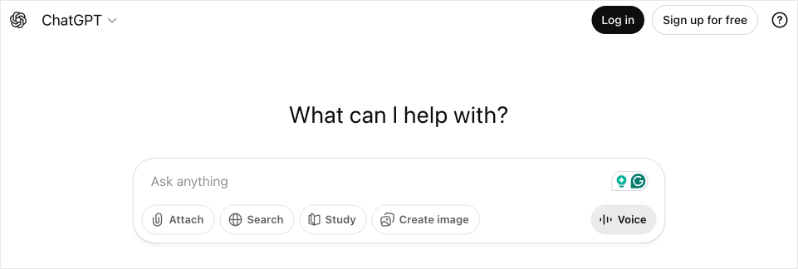
Voici quelques exemples de ce qui est disponible :
- ChatGPT peut vous aider à rédiger des propositions de subvention, des e-mails aux donateurs et du contenu pour les médias sociaux
- Les fonctionnalités IA de Canva peuvent créer des graphiques et des présentations professionnels en quelques minutes
- Grammarly utilise l’IA pour peaufiner votre écriture et garantir la clarté de votre message
- Zapier peut automatiser les tâches répétitives entre différentes applications que vous utilisez déjà
- Microsoft Copilot peut vous aider à organiser des données, à créer des rapports et à rationaliser le travail administratif
Et ce n’est qu’un aperçu. Pour une analyse complète des meilleurs outils d’IA pour les associations – y compris ce que fait chacun et comment les utiliser – consultez notre guide complet : Meilleurs outils d’IA pour les associations.
Impact réel pour les associations
J'ai personnellement gagné des heures chaque semaine sur les tâches administratives en utilisant des outils d'IA. Des tâches qui prenaient autrefois un après-midi prennent maintenant 20 minutes.
Ce temps a été réinvesti dans le travail qui compte : la stratégie, les relations, le développement de programmes et le service effectif de notre mission.
Et je ne suis pas unique. Des organisations à but non lucratif à travers le pays découvrent que l'IA ne vise pas à remplacer le cœur de leur travail. Il s'agit de le protéger – en éliminant le fardeau administratif qui les submergeait.
Si vous ne savez pas par où commencer, j'ai préparé un guide complet rempli d'explications, de conseils pratiques et d'outils gratuits que vous pouvez commencer à utiliser dès aujourd'hui :
✨ Lisez le guide complet ici : Guide ultime de l'IA pour les organisations à but non lucratif ✨
Il ne s'agit pas de suivre une tendance. Il s'agit de vous donner la capacité de faire le travail pour lequel vous vous êtes lancé dans ce domaine en premier lieu.
💰 Bonus : De nombreuses entreprises technologiques offrent des tarifs et des réductions spéciaux pour les organisations à but non lucratif. Consultez notre page Offres et réductions pour les organisations à but non lucratif pour trouver des économies sur les outils que vous envisagez déjà – IA et au-delà.
Un mot de l'équipe derrière ce guide
Chez Charitable, nous comprenons les défis auxquels les organisations à but non lucratif sont confrontées car nous avons bâti toute notre plateforme autour de leur résolution.
Charitable est un plugin de dons WordPress conçu spécifiquement pour les organisations à but non lucratif comme la vôtre. Il est conçu pour les petites organisations locales ainsi que pour les grandes organisations à but non lucratif gérant plusieurs campagnes de collecte de fonds,
Le plugin rend incroyablement simple l'acceptation des dons, l'engagement des donateurs et la croissance de votre impact – sans avoir besoin d'être un expert en technologie.
Voici ce qui rend Charitable différent :
- Facile à configurer : Créez de magnifiques formulaires de dons en quelques minutes, pas en quelques heures
- Collecte de fonds flexible : Lancez des campagnes de pair à pair, de financement participatif, des dons récurrents, et plus encore
- Adapté aux donateurs : Paiement simple et sécurisé qui n'envoie pas les donateurs vers des pages tierces confuses
- Conçu pour les organisations à but non lucratif : Des fonctionnalités telles que les reçus de dons, la gestion des donateurs et les objectifs de campagne sont incluses
- Abordable : Parce que nous pensons que des outils de collecte de fonds puissants ne devraient pas faire exploser votre budget
L'équipe derrière Charitable ne se contente pas de construire des logiciels – nous nous engageons à aider les organisations à but non lucratif à prospérer dans un monde de plus en plus numérique. C'est pourquoi nous créons des ressources comme ce guide sur l'IA, notre page d'offres et de réductions, et du contenu éducatif continu.
Charitable s'occupe des aspects techniques de la collecte de fonds afin que vous puissiez vous concentrer sur votre mission. Et maintenant, avec les outils d'IA dans votre boîte à outils également, vous avez encore plus de capacité pour avoir l'impact dont vous avez toujours rêvé.
Prêt à simplifier votre collecte de fonds ?
Nous sommes convaincus que vous aimerez Charitable au point d'offrir une garantie de remboursement de 14 jours. Si pour une raison quelconque ce n'est pas le bon choix, nous vous rembourserons – sans poser de questions.
Charitable a plus d'un million de téléchargements !
Faites confiance à des millions de personnes pour mener à bien vos campagnes de collecte de fonds. Essayez Charitable sans risque dès aujourd'hui.
✅ Garantie de remboursement de 14 jours
✅ Tarification transparente
✅ Configuration sans code
Restez connecté pour plus de ressources pour les organisations à but non lucratif
Pour plus de tutoriels et de vidéos adaptés aux organisations à but non lucratif, abonnez-vous à notre chaîne YouTube. Nous publions régulièrement des conseils d'experts, des guides étape par étape sur les dons en ligne, des stratégies de collecte de fonds et des ressources pratiques pour aider votre organisation à réussir.
🗞️ Recevez des conseils hebdomadaires et des guides exclusifs dans votre boîte de réception
Rejoignez notre newsletter →
🎥 Regardez des tutoriels étape par étape et des histoires de réussite
Abonnez-vous à notre chaîne YouTube →
👩🏽💻 Connectez-vous avec notre communauté et obtenez des informations quotidiennes sur les organisations à but non lucratif
Suivez-nous sur LinkedIn →
🥳 Reels amusants et informations sur les organisations à but non lucratif
Suivez-nous sur Instagram →
👀 Vidéos perspicaces et amusantes pour vous aider à développer votre cause
Suivez-nous sur TikTok→
🌎 Abonnez-vous et suivez pour des conseils généraux sur la collecte de fonds
Obtenez des conseils sur la collecte de fonds sur TikTok →
Ressources puissantes pour la collecte de fonds
⬇️ Téléchargez des stratégies éprouvées, des idées de campagnes et des outils d'experts
Obtenez le kit de collecte de fonds →
💸 Obtenez des ressources gratuites pour la collecte de fonds
Rendez-vous sur le Hub de collecte de fonds Charitable →
🤔 Des questions sur Charitable ?
FAQ Charitable →
🏎️ Essayez Charitable
Créez votre démo Charitable →
Comprendre les termes et le jargon des organisations à but non lucratif
Glossaire des organisations à but non lucratif→
% Vous recherchez des offres et des réductions pour les organisations à but non lucratif ?
Meilleures offres et réductions pour les organisations à but non lucratif →



Laisser un commentaire